
Choose the rules, then the cards
Two examples to check the tool
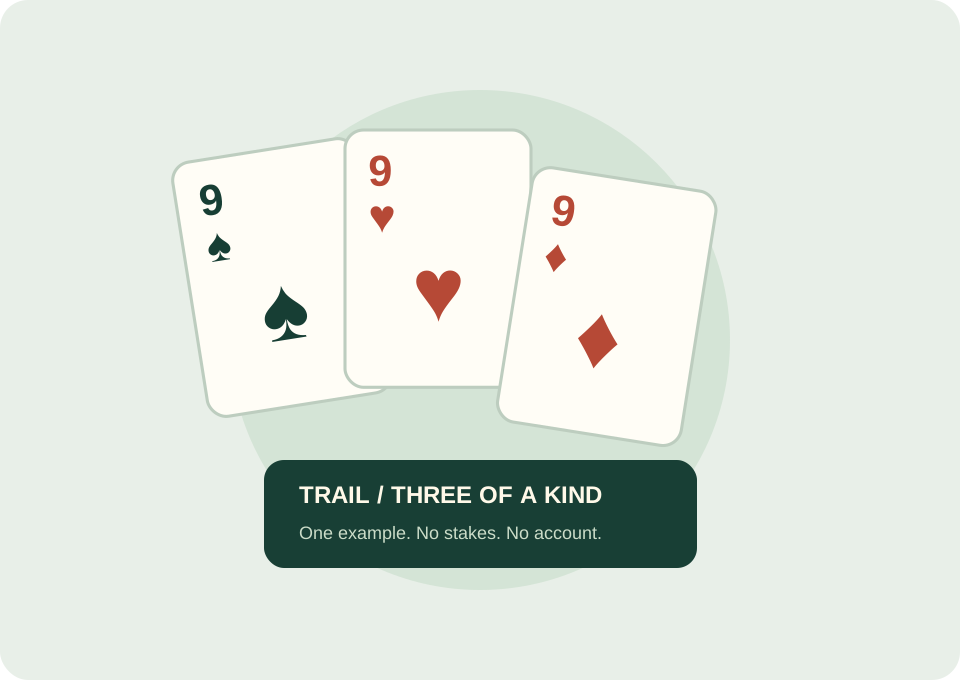
Example 1: 9♠ 9♥ 9♦ against J♣ 10♣ 9♣. Hand A is a trail; Hand B is a pure sequence. A wins the category comparison. A higher-looking run does not jump above trail.
Example 2: A♠ 2♥ 3♦ against A♥ K♣ Q♠. Both are mixed-suit sequences. Switch the ace convention: A wins under “A-2-3 highest”; B wins under either of the other two settings.
What the tool calculates
For each hand it builds a category and a tie-break order. It compares categories first and card ranks second. A pair compares the paired value before its spare card. Colour and high card compare descending ranks. If neither hand is stronger, the tool reports equal rank instead of inventing a suit winner.
Duplicate cards are rejected across both hands because this exercise uses one deck. A shuffled example is for learning only; it does not predict the deal in any app.
What it cannot decide
- Wild cards, Muflis, six-card formats or proprietary app rules.
- Whether a player should continue, fold or contribute counters.
- Who receives a pot after an equal show or sideshow.
- The legitimacy, safety or fairness of a gambling service.
Can I use it without a connection?
After the page and its small local assets load, its calculations need no network request. A normal first visit still requires a connection; there is no service-worker offline cache. You can also open the delivered local HTML package on a computer, or use a physical deck and the SVG reference chart.