
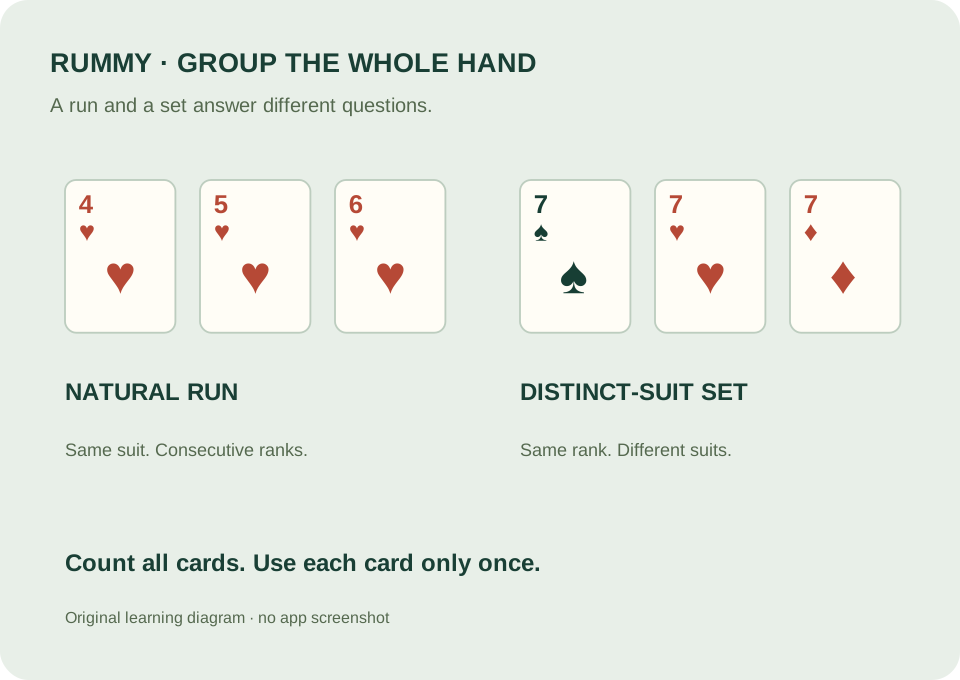
Compare the actual task
| Dimension | Rummy | Ludo |
|---|---|---|
| Materials | Cards and a grouping rule | Board, pieces and dice |
| Main practice | Sequences, sets and allocation | Legal movement and board state |
| Random input | The shuffled cards and draws | Dice outcomes |
| No-cash exercise | Repair a written hand | Explain a legal move from a board position |
Try one short lesson from each side
For Rummy, take the complete 13-card example in our Rummy hub and deliberately break one group. Explain the defect and repair it. For a comparison-based card lesson, use the Teen Patti hand tool and change one card at a time. These exercises make the task tangible without relying on an app’s marketing description.
Avoid conclusions the table cannot support
A rules comparison does not establish an app’s fairness, legal status, privacy practices, player numbers or chance of profit. The amount of skill involved is not a general permission for online monetary play. Read the legal context and inspect the actual product model separately.
Choose a learning method
If you like organising a whole hand, begin with natural runs. If you prefer a compact hand comparison, use the three-card chart. A short no-cash lesson gives better evidence of your preference than a promotional “best app” list.